There was a time when global conflicts felt distant, something to watch on the news without expecting it to reach our shores. That illusion is gone. Today, a war in Ukraine or rising tensions in the Middle East quietly find their way into everyday life across Africa, from the price of bread in Accra to fuel cost in Nairobi and even into the tough policy choices governments are forced to make.
Take the 2022 invasion of Ukraine by Russia. Within months, grains exports from the Black Sea dropped sharply, countries like Egypt, Sudan and parts of West Africa that rely heavily on imported wheat felt the shock almost immediately. Food prices rose. Government had to intervene. The lesson was simple but uncomfortable; security today is not only about soldiers and borders. It is about supply chains, energy and who controls critical systems.
The same pattern is visible in the Middle East. Ongoing tensons involving Israel, Iran, USA and their allies have repeatedly disrupted oil markets. Each spike in global oil prices hits African economies hard, especially those that import refined fuel. It affects transportation, electricity and inflation. Again, events far away expose how vulnerable many African states remain.
So, the real question is not whether Africa should think about security differently. It is whether we are ready to take that conversation seriously.
For decades, many African countries have relied on external partners for military support, intelligence and even basic equipment. In some cases, this has helped stabilize fragile states, but it has also created a pattern of dependence.
When your security system depends on foreign funding or logistics, your policy choices are never fully your own. We have seen situations where partnerships shift based on geological interests, leaving local governments exposed. In parts of the Sahel, for example, changes in foreign military engagement over the past decade have created gaps that armed groups quickly exploited.
Dependence also affects priorities. External partners may focus on counterterrorism, while local communities are more concerned about policing, livelihoods and governance. That mismatch can deepen mistrust between citizens and the state.
African countries should build local capacity without fueling instability. This is where the conversation becomes delicate. Talking about indigenous defense industries can easily be misunderstood as a call for militarization, that is not the point.
The real issue is capacity. African countries need the ability to maintain, repair and gradually produce essential defense tools within a framework that respects international law and regional stability. This includes basic manufacturing, logistics systems and technical training.
Countries like South Africa have already shown that it is possible to build parts of a defense industry while remaining within global regulatory systems. The goal is not to compete with major powers, but to reduce vulnerability and improve responsiveness.
Technology is changing the game. Modern conflicts are not fought the way they were twenty years ago. The Russia-Ukraine was has shown how drones, satellite intelligence and cyber operations can shape outcomes on the battlefield. Low-cost drones in particular, have become powerful tools for surveillance targeted operations.
For African countries, this presents both an opportunity and a risk. On one hand, these technologies are more assessable than traditional military hardware. On the other, they can be misused if not properly regulated. Investing in cyber defense is just as important. Many government systems, financial institutions and even electoral process are now digital. A cyberattack can disrupt a country without a single shot being fired.
As someone grounded in human rights and peace studies, I do not see security and rights as opposing forces. Security must still respect rights. In fact, ignoring rights often creates the very instability governments are trying to prevent. We have seen this in different contexts. Heavy-handed security responses can alienate communities, making it easier for external groups to recruit. Accountability, transparency and respect for the rule of law are luxuries. They are part of an effective security strategy. This is where African governments needs to be intentional. Strengthening security should go hand in hand with strengthening intuitions.
African governments must think long-term affordable and sustainable energy, infrastructure and long-term resistance strategies. Another lesson from the ongoing conflicts is the importance of energy security. Europe’s experience after 2022 showed how dependence on external energy sources can quickly become a strategic weakness.
For Africa, this is not a new conversation. It goes back to the vision of Kwame Nkrumah, who in the early years of independence saw science and technology as central to true sovereignty when he established the Ghana atomic energy commission in 1963, he made it clear that nuclear science was not about prestige or power politics, but about development. As he put it at the time, the aim was to harness atomic energy “for the solution of the problems of agriculture, medicine and industry” in Ghana. That original thinking still holds weight today.
Across the continent, a number of countries are quietly building on the same foundation. In Egypt, President Abdel Fattah el-Sisi formally advanced plans for the El Dabaa nuclear power plant in 2015, with construction milestones accelerating from 2022 onward. The project is expected to support long-term electricity needs, reduce dependency on fossil fuels and stabilize industrial growth.
In South Africa, under president Cyril Ramaphosa, the country continues to rely on its existing nuclear infrastructure, particularly the Koeberg plant, while exploring expansion options to address persistent energy shortages that have affected economic productivity over the past decade.
Meanwhile, Nigeria has, since around 2017 under President Muhammadu Buhari, pursed agreements for nuclear power development as part of its broader strategy to close its electricity gap and support industrialization. More recently, Bola Ahmed Tinubu has signaled continuity in diversifying the country’s energy mix.
In Kenya, planning for nuclear energy has been underway since the early 2010s, with momentum building during the administration of Uhuru Kenyatta and continuing under William Ruto. The goal is clear; to secure realistic baseload power that can sustain manufacturing and long-term economic growth.
What ties these efforts together is not a rush toward militarization, but a recognition that stable and affordable energy is the backbone of development. Nuclear energy, under strict international oversight, offers one pathway to achieve that stability while reducing exposure to the price shocks and supply disruptions that have repeatedly affected African economies. Of course, this must be done within the rules set by bodies like the International Atomic Energy Agency. The goal is sustainability, not proliferation. No African country can address these alone. Regional institutions like the African Union and sub-regional blocs like ECOWAS have a critical role to play.
Collective security arrangements, intelligence sharing and joint training programs can strengthen the continent’s overall resilience. More importantly, African-led solutions are often better aligned with local realities.
For those of us who have spent years advocating for peace, this conversation may feel like a shift. And it is. But it is not a rejection of peace. It is a recognition that peace today requires preparedness, resilience and strategic clarity.
The world is changing. Power is more distributed. Conflicts are more complex. And the line between economic and military security is increasing blurred.
African nations do not need to enter an arms race. That would be counterproductive. But they do need to think seriously about autonomy. About reducing dependence. About building systems that can withstand external shocks.
I encourage African governments to invest heavily in local technical capacity for defense maintenance and production within international legal frameworks, develop clear national strategies for cyber defense and emerging technologies, strengthen oversight mechanisms to ensure security policies respect human rights, expand regional cooperation on intelligence and conflict prevention through bodies like the African Union, prioritize energy security through diversified and sustainable sources including regulated nuclear options and align security planning with broader economic and social development goals. The aim is balance, not weakness but not aggression either, and not dependence but not isolation. Africa has the opportunity to define its own path in this new global order. The question is whether we are willing to move from reacting to shaping.
-END-
By:
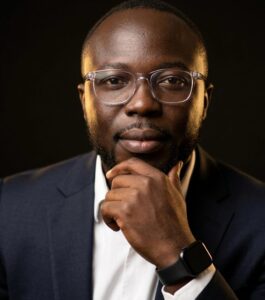
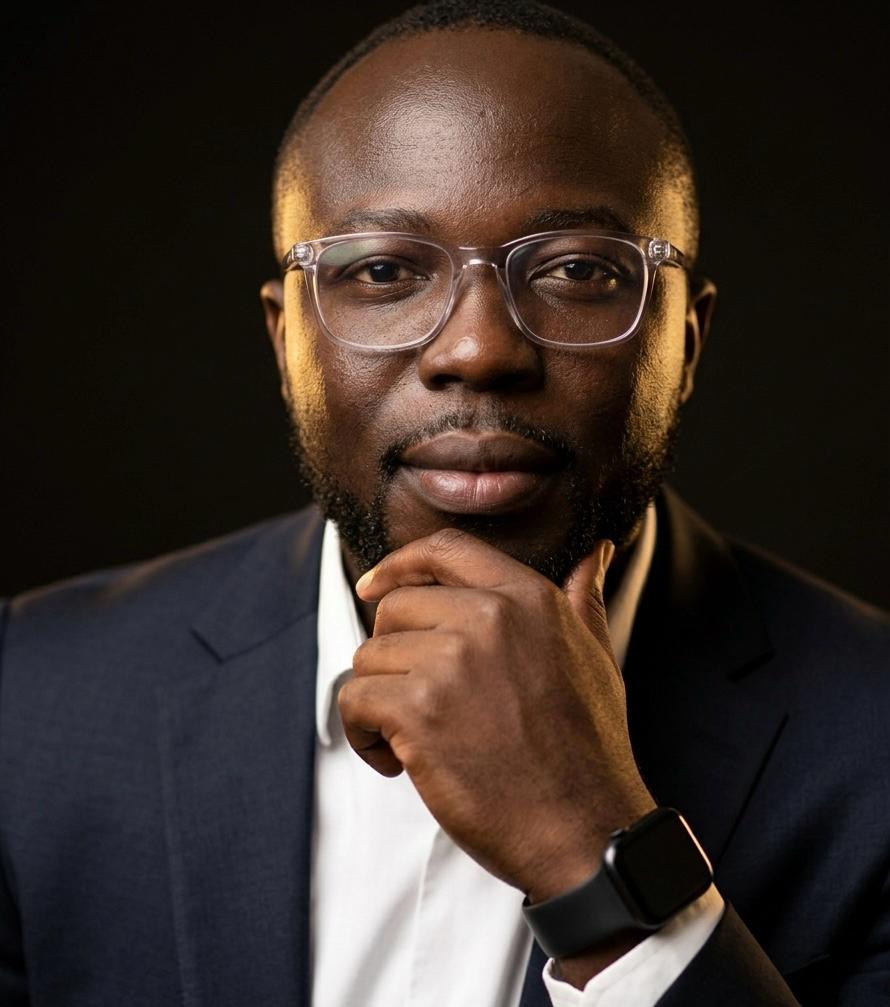
Henry OSABUTEY, M. PHIL – Human Rights, Peace & Conflict Studies
+233 243 131 088 | ohenry@evolveafrika.com | henryosa@gmail.com | www.evolveafrika.com